

How to Turn Business Knowledge Into Useful Blog Posts With AI
Learning how to turn business knowledge into blog posts with AI starts with a simple principle: AI can organize and draft information, but it needs accurate business context and a clear reader question. The strongest articles do not begin with a broad instruction to write about a service. They begin with the practical details you already know, then shape those details into a helpful answer for a potential customer.
That approach keeps the article useful without asking AI to guess at your services, policies, methods, prices, or results. It also makes review faster because the draft has a clear purpose from the beginning.
Start with knowledge that customers can actually use
Business knowledge is more than a list of services. It includes the explanations you give before someone makes a decision, the terms they use when describing a problem, the choices that affect the outcome, and the misunderstandings that slow the process down.
Useful source material for a blog post can include:
- What a service, product, or process does and does not include
- Questions people need answered before they choose an option
- Preparation, timing, care, or maintenance considerations
- Meaningful differences between options
- Information that changes when a customer has a particular goal or constraint
- Accurate website pages that explain a relevant next step
The key is to share information that is specific enough to guide the draft. For example, “write about our services” gives AI almost no useful boundary. “Explain how customers can compare two verified service options, including the goals and tradeoffs that change the choice” gives the article a clear job.
Not every internal detail belongs in public content. A business blog should focus on information that helps readers understand, decide, prepare, or avoid a common mistake. Internal procedures, unconfirmed plans, or claims you would not make directly to a customer should stay out of the brief.
Choose one customer question before asking AI to draft
A broad topic often produces a broad article. Instead, identify one question a reader should be able to answer after reading. This decision controls the title, outline, examples, and conclusion.
Good questions tend to reflect a task. A reader may want to compare two options, prepare for a project, understand what affects timing, recognize when more information is needed, or know what to ask before moving ahead. Each of those questions produces a different article, even when they relate to the same service.
Try moving from a subject to a decision:
- Too broad: “Our installation services”
- Focused: “What should you decide before planning an installation project?”
- Too broad: “Skin care”
- Focused: “How should you compare skin care treatments when your goal is hydration rather than exfoliation?”
- Too broad: “Financial planning”
- Focused: “Which documents should you gather before an initial financial planning conversation?”
These are examples of article angles, not claims about services we offer. Their value is in the structure: a useful post promises one clear outcome and follows through on it.
A focused question also prevents repeated content. Before drafting, check whether an existing post already answers the same question. If it does, look for the next step in the reader’s journey rather than creating a near-duplicate with a new title.
Give the draft reliable business boundaries
AI-written content becomes more trustworthy when it can distinguish between two kinds of information: facts about your business and general guidance for the reader. Both have a role, but they should not blur together.
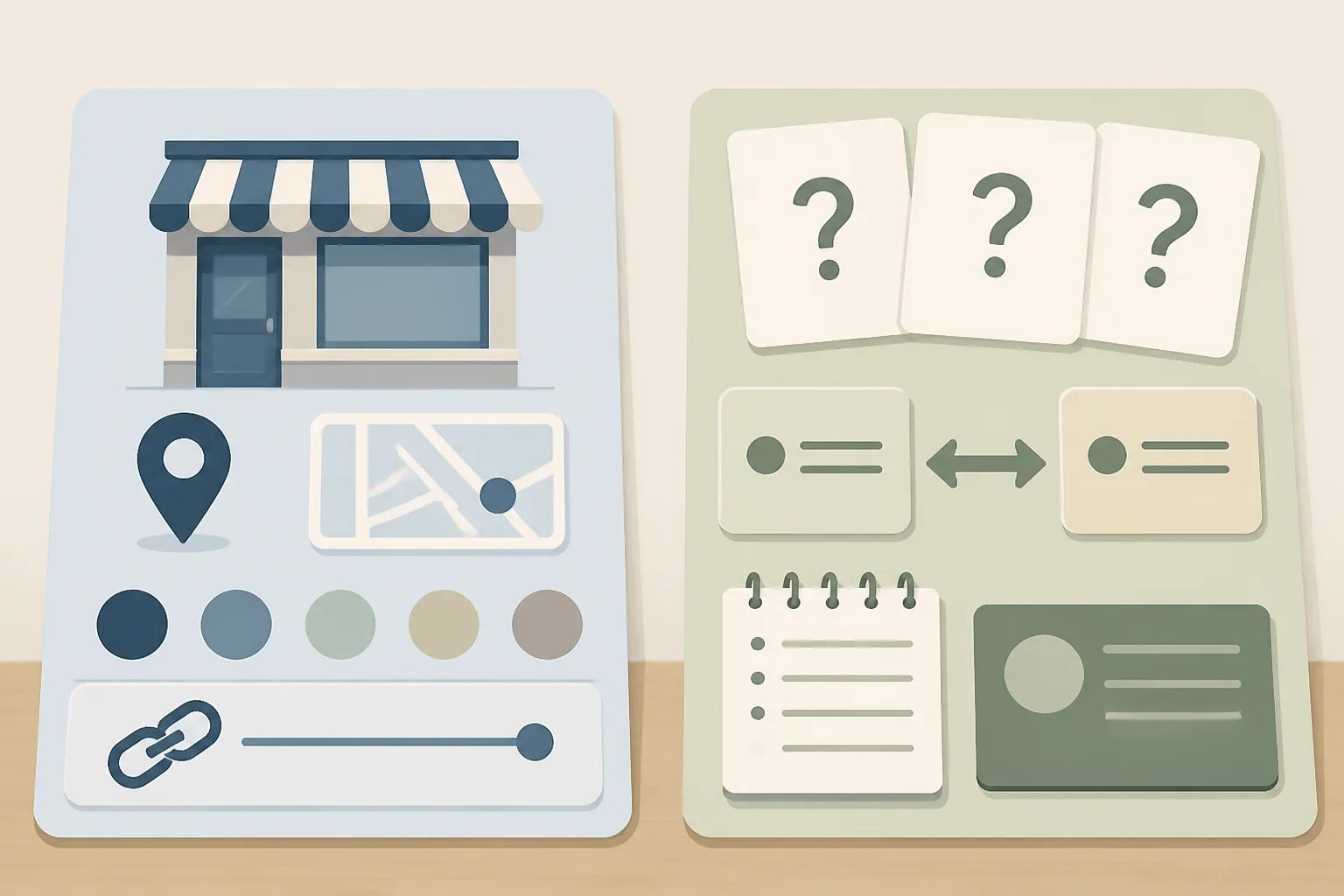
Business facts are details you have confirmed, such as official service names, products, locations where relevant, brand voice, and an approved call to action. General guidance explains the broader topic, such as common decision factors, terminology, or preparation questions. General guidance can make a post more helpful, but it should never become an implied promise about your own business.
For instance, an article can explain that readers commonly compare a project by scope, timing, upkeep, and budget. It should not state that a particular business provides a fixed timeline, uses a specific material, or guarantees a result unless that fact has been verified.
At Gordon, we use the business information you provide as the foundation for each article, including services, locations where applicable, writing style, and a preferred next step. Our AI article-writing workflow is designed to keep those facts separate from general educational content, so a draft has useful boundaries instead of unsupported detail.
Build a brief that gives AI a clear job
A concise brief is often more useful than a long prompt. It tells AI what the reader needs, what facts it can use, and what it must avoid assuming. The goal is not to control every sentence. It is to supply the decisions that a generic tool cannot know on its own.
AI writing brief
What to give AI before it writes
Use this short brief to turn business knowledge into a focused, reviewable article instead of a generic draft.
- The one customer question the article must answer
- Verified business facts the article may mention
- General topics or terminology that need plain-language explanation
- Details that are unknown, changing, confidential, or off-limits
- The desired reader outcome, such as comparing, preparing, or deciding
- Relevant approved pages that would genuinely help the reader
- The brand voice and an approved next step, if one is available
When a draft has these inputs, the structure should feel purposeful. The opening can answer the main question quickly, each section can address a distinct follow-up question, and the ending can point to an appropriate next step without becoming a generic sales message.
Use structure to make the article easy to trust and scan
Readers do not need every article to be long. They need it to be easy to understand. A strong structure makes the answer visible before the reader commits to every detail.
For most customer-focused blog posts, a practical sequence is:
- Direct answer: Explain the main point in the opening, including who the guidance is for.
- Decision factors: Cover the details that change the answer, such as goals, timing, condition, compatibility, maintenance, or scope.
- Actionable guidance: Add steps, questions, examples, or a comparison only where they help a reader act.
- Relevant context: Mention a verified service or resource when it genuinely helps a reader continue their research.
- Clear close: Restate the practical takeaway and offer an approved next step when one is available.
Headings should describe the information underneath them, not simply divide the page into equal blocks. Lists are useful for a sequence or a set of checks. Tables work when readers truly need a side-by-side comparison. If a format does not clarify a decision, leave it out.
We prepare articles with structured HTML, title and metadata suggestions, featured image direction, and relevant internal links when suitable approved pages are available. For a closer look at the publishing elements beyond the body copy, read our guide to WordPress-ready content.
Review AI output as the person responsible for the facts
AI can create a polished first draft, but it cannot confirm whether a changing business detail is current. The final review is where you protect accuracy, voice, and reader value before an article represents your business.
Editorial safeguard
Treat the final review as part of writing, not an optional extra
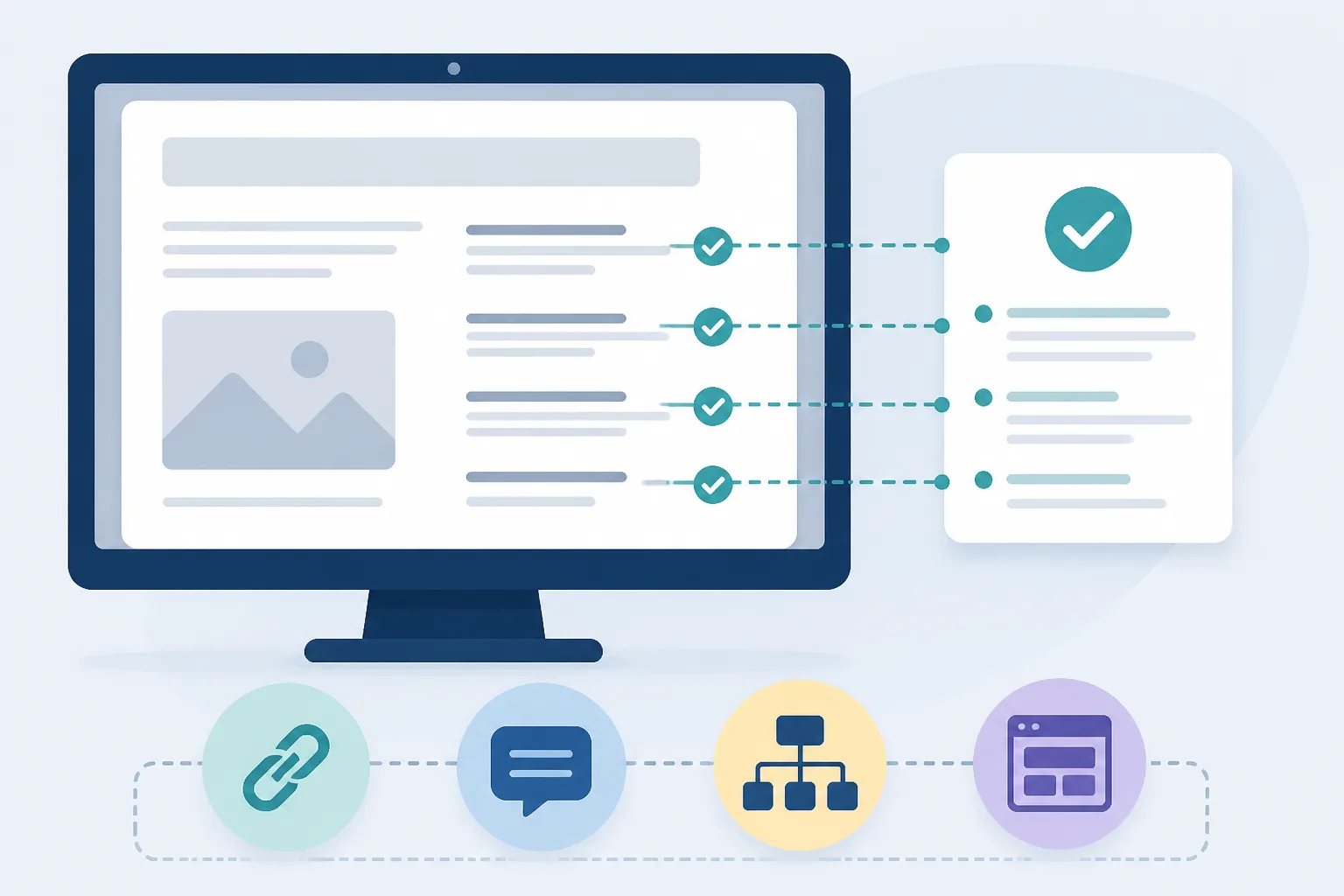
Before publication, verify every claim that speaks for your business. AI can help organize and draft, but only you can confirm whether service details, policies, availability, prices, methods, and calls to action are correct and current.
Start with statements readers could rely on when deciding what to do: service descriptions, locations, prices, policies, availability, qualifications, methods, and calls to action. Confirm each one or remove it. Then read for scope. Does the introduction answer the title? Does every heading add something new? Has the article wandered into unrelated services or generic background?
Next, edit for your voice. Replace inflated claims with clear explanations. Remove repeated ideas and sentences that sound impressive without helping the reader. Check that links lead to the intended page and that their anchor text explains what a visitor will find.
Our detailed guide on reviewing an AI-written article before publishing walks through fact checks, reader value, tone, links, and post-level details in a practical order.
Keep publishing control after the draft is finished
A completed draft and a published post are different stages. Once the article is reviewed, you can decide whether it should remain a draft, be scheduled for a future date, or go live. That separation is particularly useful for content with details that might change before publication.
Gordon supports reviewing and editing an article before you choose to save it as a draft, schedule it, or publish it to WordPress. If you are building ahead, scheduling should come after the final check, not instead of it. Our guide to scheduling WordPress blog posts explains how to verify that a post is complete, displayed correctly, and set for the right date before it is scheduled.
The practical takeaway is simple: use AI to reduce the work of turning knowledge into a structured draft, then use your expertise to make the final article accurate and genuinely useful. The combination is stronger than either step alone.
Helpful answers
Frequently Asked Questions
Turn a focused idea into a review-ready draft
Use Gordon to shape the business knowledge you already have into a structured article you can review, refine, and publish on your terms.