

How to Use AI Article Writing Without Losing Your Business Voice
AI article writing does not have to make your website sound generic. The best way to use it without losing your business voice is to give the drafting process clear business context, choose one real customer question, and review every statement that represents your business before publication. AI can organize and draft the article; you decide whether the facts, tone, and next step are right.
At Gordon, we create WordPress-ready article drafts from the services, locations where relevant, writing style, website pages, and calls to action you provide. That context gives the draft useful boundaries. It also means you can spend less time starting from a blank page and more time applying the knowledge only your business has.
Why generic AI content loses a business voice
A broad prompt usually produces broad copy. It may sound polished, but it has no reliable basis for knowing which services you offer, how you describe them, what information is current, or which next step belongs at the end of an article.
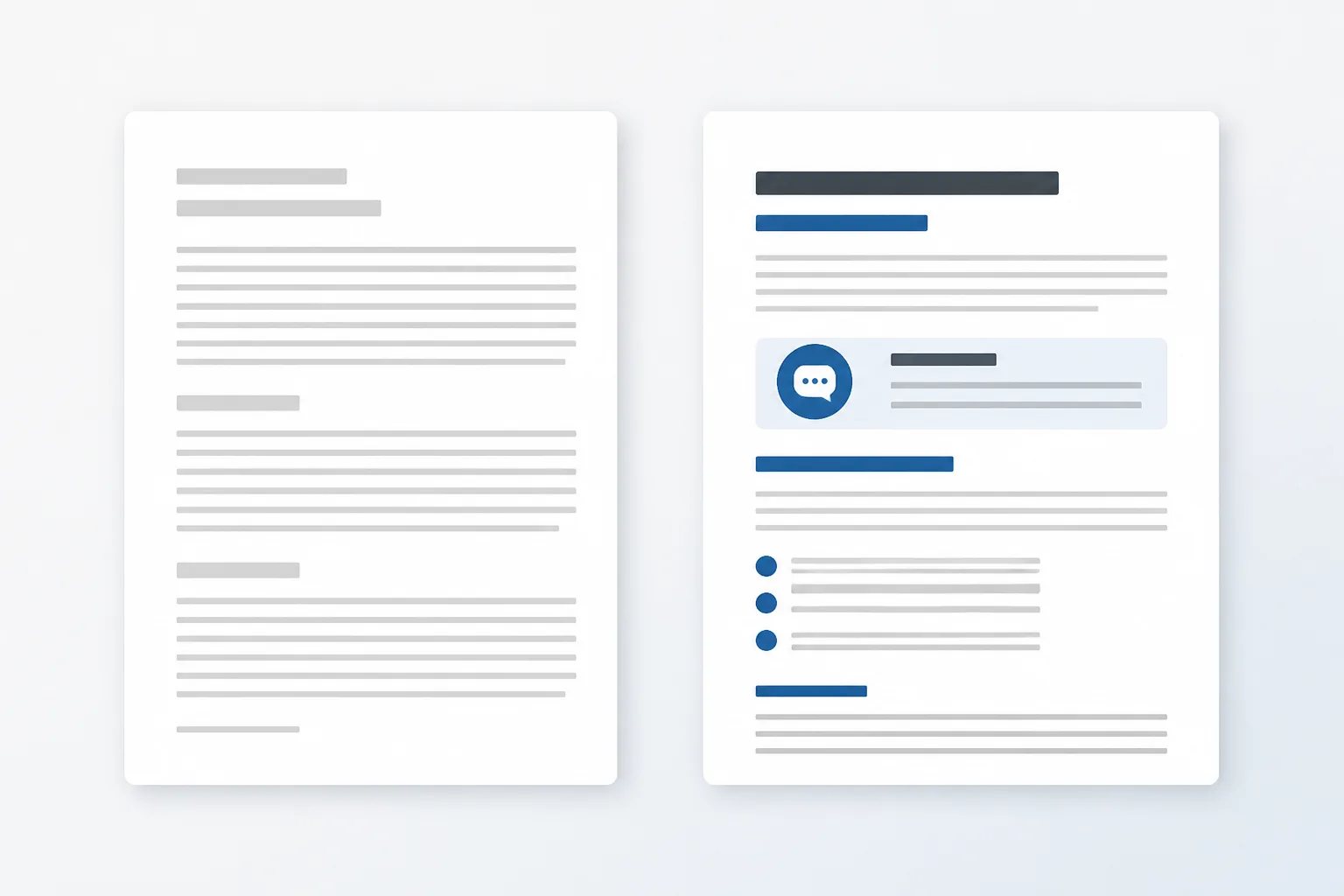
A business voice is more than a friendly or formal tone. It includes the words you use for your services, the level of detail that suits your audience, the claims you are comfortable making, and the practical questions you want your website to answer. Those choices cannot be recovered by asking an AI tool to “make it sound human” after a generic draft is complete.
Start with facts and direction instead. A useful article brief identifies the customer question, the article’s goal, the relevant business details, and any limits on what the article should claim. This gives the draft a purpose beyond filling a blog calendar.
Give AI the context that makes an article specific
Context does not mean providing every detail about your business every time. It means giving the system a dependable foundation that it can use when the detail genuinely applies to the topic. For example, a comparison post needs accurate service names and distinctions; a preparation post may need only the relevant service page and a clear reader task.
For a closer look at this approach, see how our AI article-writing workflow turns business details into a publishable draft. We use the information you share to make the article more relevant while keeping unsupported details out of business-specific claims.
Useful inputs generally include:
- What you offer: exact service, product, or program names that the article can accurately discuss.
- Who the article helps: the reader’s question, decision, concern, or preparation task.
- Your preferred language: terminology, tone, and wording that readers would recognize from the rest of your site.
- Relevant website pages: approved internal destinations that can answer a logical follow-up question.
- A suitable next step: a call to action that fits the reader’s stage of decision-making.
How to use AI article writing without losing your business voice
Think of AI as a drafting partner, not the final authority on your business. The most reliable workflow separates what AI can do efficiently from what requires your approval.
Practical workflow
Five steps for using AI without sounding generic
Use this sequence to turn an AI draft into content that reflects your business accurately.
- Start with one customer question the article must answer.
- Supply the relevant business facts, terminology, website pages, and preferred tone.
- Review the opening and headings to confirm the draft stays focused on that question.
- Verify every statement about your services, processes, policies, locations, timing, and call to action.
- Edit for natural voice and practical value before saving, scheduling, or publishing.
This process helps prevent two common problems: an article that says little beyond generalities, and an article that makes a confident statement your business never approved. The first wastes the reader’s time. The second can misrepresent your business.
Keep general guidance separate from promises about your business
Educational content is often valuable because it helps readers compare options, understand terminology, prepare for a purchase, or know what questions to ask. But general information should not quietly become a claim about your own methods, prices, timelines, results, qualifications, or policies.
For example, a business article can explain that a reader may compare options based on timing, upkeep, budget, compatibility, or desired outcome. It should not state that your business uses a particular method or offers a particular turnaround time unless you have confirmed that detail.
Accuracy boundary
General guidance is not a business promise
An AI draft can explain common decision factors and terminology, but it should not claim that your business uses a method, follows a policy, offers a price, or delivers a result unless you have verified it.
When reviewing an AI draft, read each sentence that uses “we,” “our,” or your business name with extra care. Ask whether you would say it directly to a prospective customer today. If the answer is no or you cannot verify it, remove it, correct it, or rewrite it as clearly labeled general guidance.
Use a review pass for accuracy, voice, and reader value
Editing an AI draft should be more purposeful than simply correcting grammar. A short set of focused passes makes it easier to spot different types of problems without overlooking the article’s main purpose.
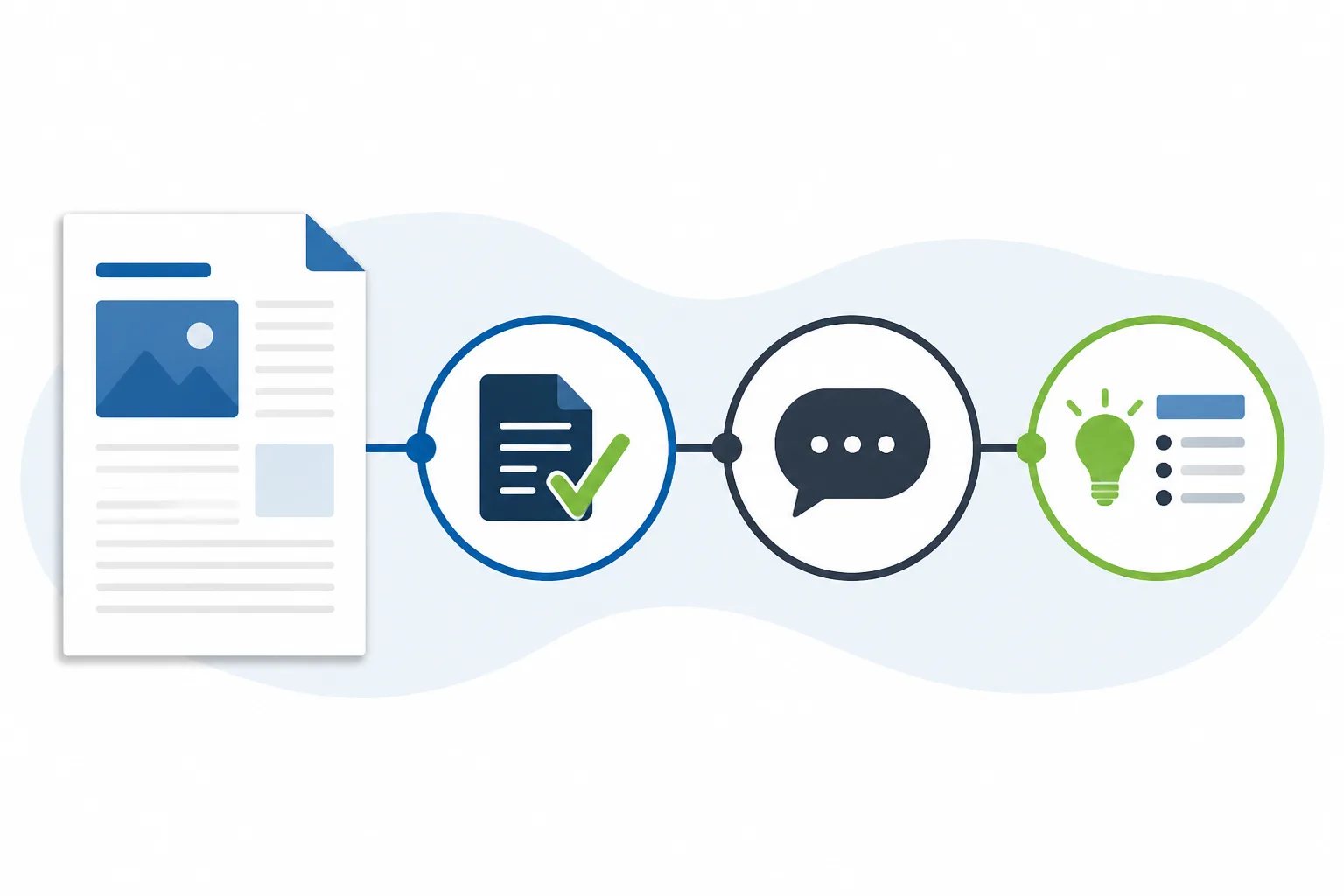
Check the factual claims first
Confirm service names, products, locations where relevant, processes, pricing, availability, policies, credentials, outcomes, and calls to action. These details are the most likely to influence a reader’s decision, and they can change over time.
Then check whether it sounds like you
Look for inflated claims, overly formal phrasing, repeated keywords, or vague marketing language that does not match your usual communication. Replace it with plain, specific wording. A clear sentence about what a reader needs to know is more credible than a string of broad benefits.
Finally, check the article’s usefulness
Read the title, opening, headings, and conclusion in sequence. The article should answer the promised question early, and each section should add a new decision factor, explanation, example, or action. If a paragraph repeats an earlier point or only extends the introduction, cut it.
Our guide to reviewing an AI-written article before publishing provides a fuller process for checking facts, voice, practical value, and WordPress details.
Make the final draft easy to use in WordPress
A strong article needs more than finished paragraphs. Before publishing, readers benefit from descriptive headings, short readable sections, links that lead somewhere useful, and formatting that makes steps or comparisons easier to scan. The post also needs supporting details such as a clear title, slug, meta description, excerpt, and image direction where your site uses them.
That does not mean every article needs a table, several images, or a long FAQ. Use each element only when it clarifies the answer. A simple explainer may be strongest with concise sections and one relevant internal link. A comparison may need a side-by-side table. The format should follow the reader’s task, not a template.
Read our practical guide to what WordPress-ready content includes for a closer explanation of the publishing elements that sit beside the body copy. With Gordon, you can review and refine an article, then decide whether to save it, schedule it, or publish it when it is ready.
A better result comes from clear inputs and final approval
AI article writing works best when it reduces the work of turning your knowledge into a well-structured first draft. It should not replace the business judgment that verifies claims, adds real context, and decides what belongs on your website.
Give the draft a specific customer question, supply the details that make your business distinct, and reserve time for a final review. That combination produces content that is more useful to readers and more recognizably yours.
Helpful answers
Frequently Asked Questions
Turn your business knowledge into a review-ready draft
Create a focused WordPress-ready article, then refine the final wording and publishing decision on your terms.