

How to Fact-Check AI Content for Your Business Website
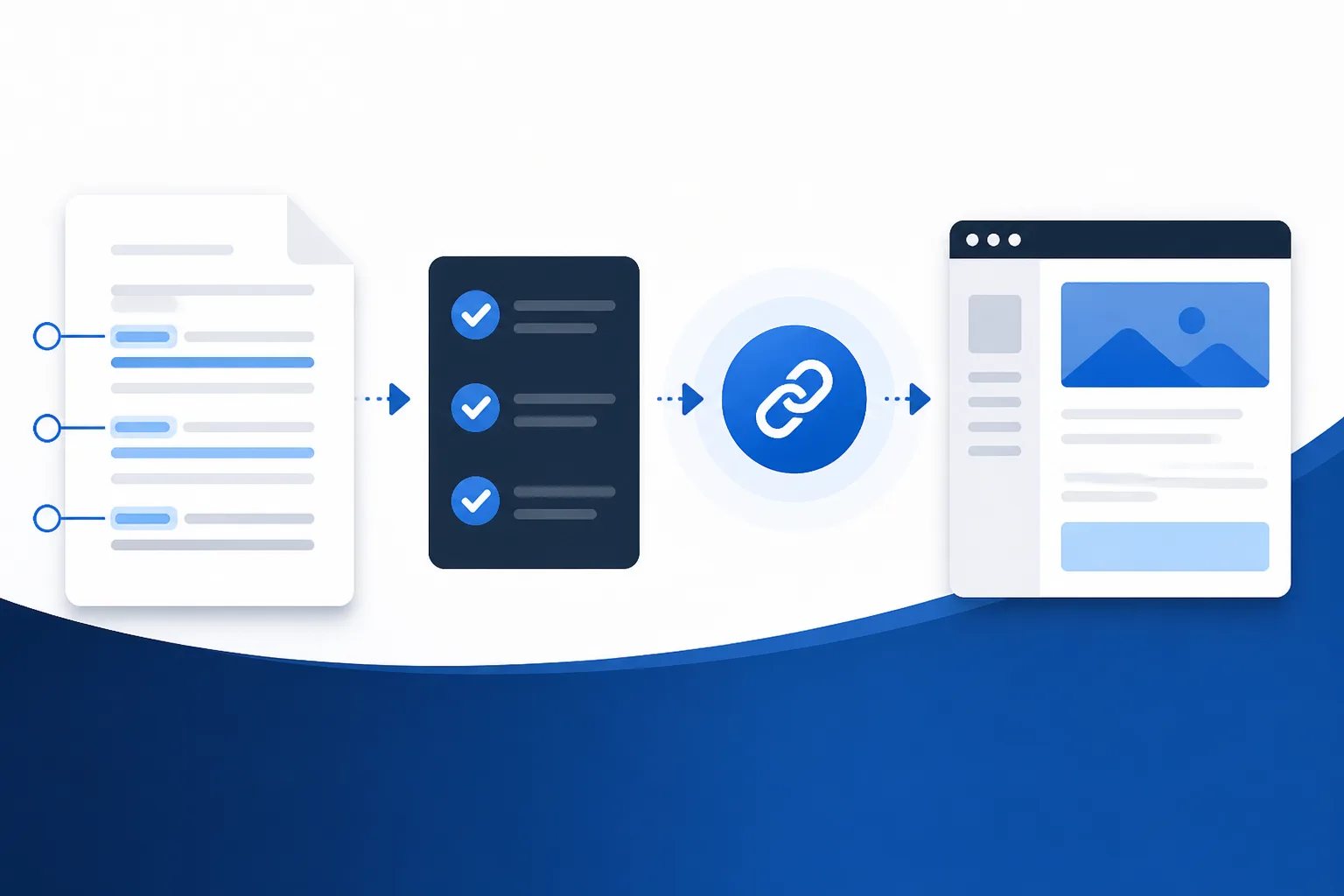
To fact-check AI content for your business website, review every statement that readers could interpret as a promise about your business. Start with services, products, locations, prices, policies, timelines, methods, qualifications, and calls to action. Then check whether the article answers its stated customer question, uses your natural voice, and displays correctly in WordPress.
AI can turn an idea into a structured first draft quickly, but it does not know which details are current unless you provide and confirm them. At Gordon, we create WordPress-ready article drafts from the business details, writing style, approved pages, and call to action you share. Your final review is where the draft becomes something you are comfortable publishing under your name.
Why fact-checking AI content needs its own editing pass
Grammar and factual accuracy are different jobs. A sentence can be clear, confident, and well written while still stating an outdated service, an unsupported turnaround time, or a policy your business does not have. That is why fact-checking works best as a separate pass before you start refining style.
Focus first on details that could influence a reader’s decision. A visitor may rely on a claim about what you offer, how something works, where you serve, what it costs, or what happens next. If you cannot confirm a statement, remove it, correct it, or rewrite it as general guidance that does not speak for your business.
This is not about stripping useful information from an article. General educational content can explain terminology, compare decision factors, describe preparation, or identify reasonable questions to ask. The key is making sure general information does not quietly become a claim about your own methods or promises.
Check business claims before editing the prose
Read the draft once looking only for statements that use your business name, “we,” “our,” or other wording that represents your business. Also flag any sentence that implies a specific offering or policy, even when it does not name your business directly.
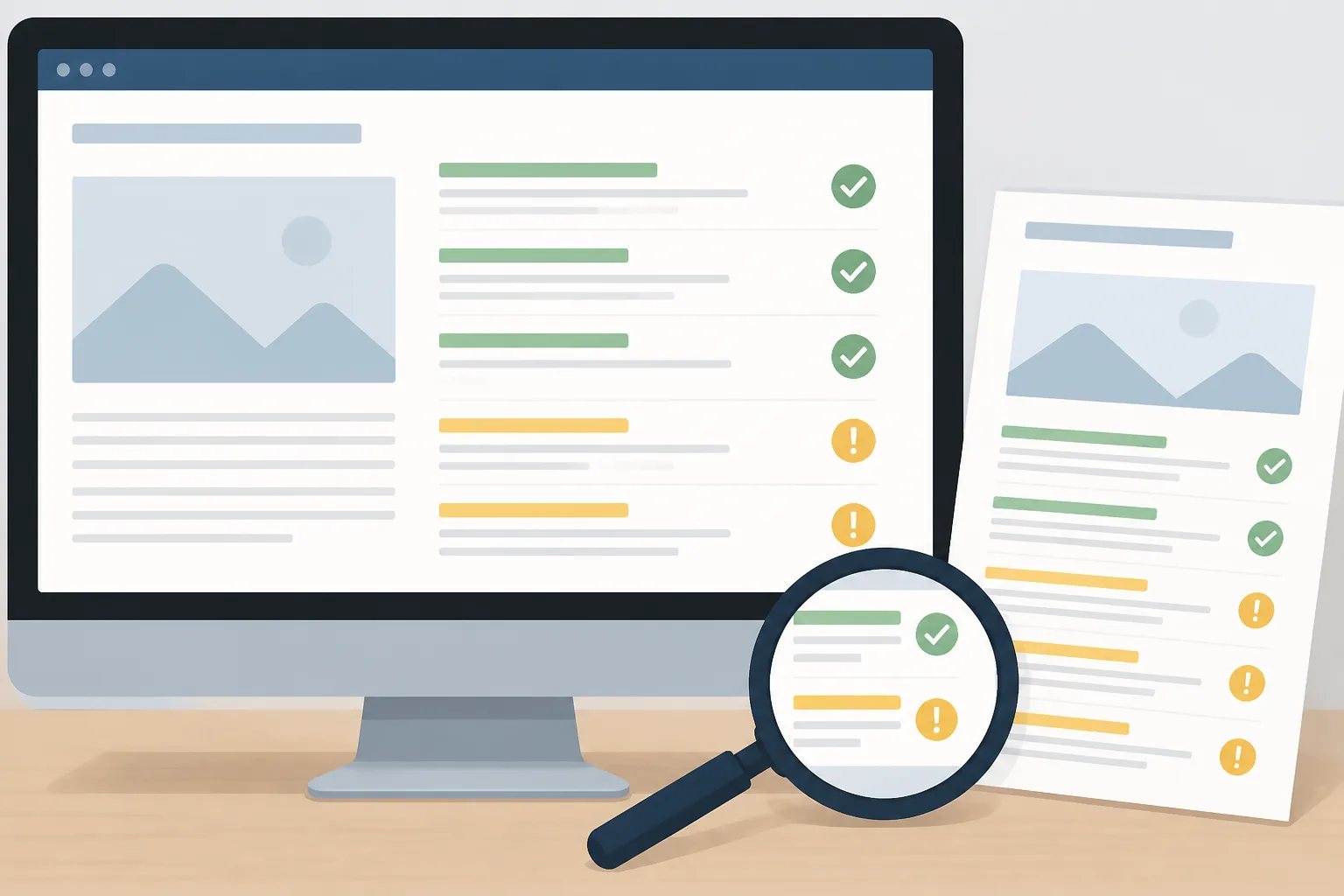
- Offerings: Confirm exact service, product, program, and audience names.
- Operational details: Verify locations, service areas, availability, process descriptions, tools, materials, and qualifications.
- Commercial details: Check pricing, discounts, timelines, guarantees, and terms before they appear in customer-facing copy.
- Results and recommendations: Remove outcomes or claims of superiority that you cannot support.
- Next steps: Confirm that the call to action and its destination still make sense for the article.
Be particularly careful with implied claims. For example, a sentence that says a business “helps customers choose the right option” can sound harmless, but it still represents a service approach. If that approach has not been confirmed, use a narrower statement or remove it.
Separate general guidance from your business facts
A helpful article often needs information beyond a short description of what you offer. A comparison may need to explain tradeoffs. A preparation guide may need to explain what information a reader should gather. An explainer may need plain-language definitions. Those are valid uses of general guidance.
The problem begins when the draft blurs the boundary. An article can say that readers commonly compare options by timing, maintenance, budget, compatibility, and desired outcome. It should not say that your business uses a particular material, includes a particular step, or provides a particular timeframe unless you have verified it.
Use this simple test: could a reader reasonably treat this sentence as a promise about us? If yes, confirm it against current business information. If no, make sure the language clearly remains educational rather than sounding like a hidden service description.
For a fuller review sequence that covers claims, reader value, voice, and publishing details, see our guide on reviewing an AI-written article before publishing.
Accuracy boundary
Polished wording is not proof that a business claim is true
Give extra scrutiny to sentences written in your business voice. A draft can explain a topic accurately in general terms, but any claim about what we offer, how we work, or what readers can expect needs current confirmation before publication.
Test whether the article answers one customer question
Accuracy alone does not make an article useful. After the fact check, read the title and opening together. Within the first paragraph, can a visitor tell what question the article answers and why the answer matters? If not, sharpen the opening before adding more material.
Next, scan the headings without reading the paragraphs. They should show a logical route through one topic. Each major section needs a distinct job, such as explaining a decision factor, showing a preparation step, comparing alternatives, or clarifying a limitation. Combine sections that make the same point in different words.
Watch for a common AI-draft problem: broad background that delays the answer. Background belongs only when it changes the reader’s understanding or action. If an industry overview, history, or service list does not help answer the article’s main question, cut it.
Our guide to organizing a blog post around search intent explains how to build an article around the questions a reader needs answered next, rather than around repeated phrases.
How to fact-check AI content without losing your business voice
Once the claims and structure are sound, edit for voice. AI writing can be polished but still feel unlike the rest of your site: too formal, overly enthusiastic, vague, or packed with generic phrases. Read the piece aloud, or compare it with a page that already reflects the tone you want to keep.
Replace broad claims with plain explanations. Instead of saying a service is “leading” or “best,” explain a verified feature only when you have one to state. Instead of repeating that something is important, name the consequence or action. Clear language sounds more credible because it gives the reader useful information rather than asking them to trust a claim.
Also look for language that assumes customer behavior. Statements such as “our clients always prefer” or “customers love” need evidence. A better approach is to explain the consideration directly: a reader may prioritize speed, flexibility, detail, or a specific outcome. That keeps the article useful without pretending to know more than you do.
Final editing pass
A practical fact-check checklist for AI-written articles
Use this sequence after the draft is complete and before you decide whether it is ready for WordPress.
- Verify services, products, locations, processes, policies, prices, timing, qualifications, and calls to action.
- Remove or rewrite any business statement you cannot currently confirm.
- Check that the title, opening, headings, and conclusion answer the same customer question.
- Cut repeated points and background that does not change the reader's understanding or next action.
- Replace generic claims and assumed customer preferences with direct, useful language.
- Test internal links and preview the article's headings, spacing, lists, and images in WordPress.
Finish with links, metadata, and a WordPress preview
A fact-checked article can still create problems if the surrounding publishing details are incomplete. Review the title, slug, meta description, excerpt, headings, internal links, image direction, alternative text, and any categories or tags your site uses. They should all describe the same focused topic.
Test every link. The anchor text should tell readers what they will find, and the destination should be relevant to the sentence around it. Remove links that are vague, outdated, or included only to repeat a phrase.
Then preview the article in WordPress. Check the first screen, heading hierarchy, paragraph spacing, list formatting, image display, and link behavior. If your workflow supports it, inspect the page on a narrow screen as well as a larger display. The preview is where you can catch a heading at the wrong level, an awkward line break, or a table that is difficult to use before readers see it.
For more detail on the publishing package around the body copy, read our practical guide to what WordPress-ready content includes.
Make review a safeguard, not a bottleneck
You do not need to rewrite every AI draft from scratch. A focused review process protects the parts that matter most: business accuracy, reader usefulness, brand voice, and page presentation. Check claims first, confirm the article’s purpose, edit for natural language, and finish with a publishing review.
That approach lets AI handle the work of shaping a first draft while you retain control over what your website says about your business. The result is not simply content that reads smoothly. It is content you can publish with confidence because it is accurate, useful, and recognizably yours.
Helpful answers
Frequently Asked Questions
Create a review-ready article draft
Start with structured content based on the business details, voice, and approved next steps you provide.